NDA
Goal
Digitise the entire physical archive of one of the world’s largest Italian luxury fashion brands, to make it easier to consult remotely and to connect items with one another, without carrying the warehouse’s limitations over online.
A tailor-made experience
Ongoing collaboration with the client’s archive and digital teams was essential in order to customize the standard solution offered by the vendor. The various user categories had different needs. Involving all stakeholders in the discussions allowed us to prioritise the various requests, putting shared needs at the top of the list.
How did we organise the content?
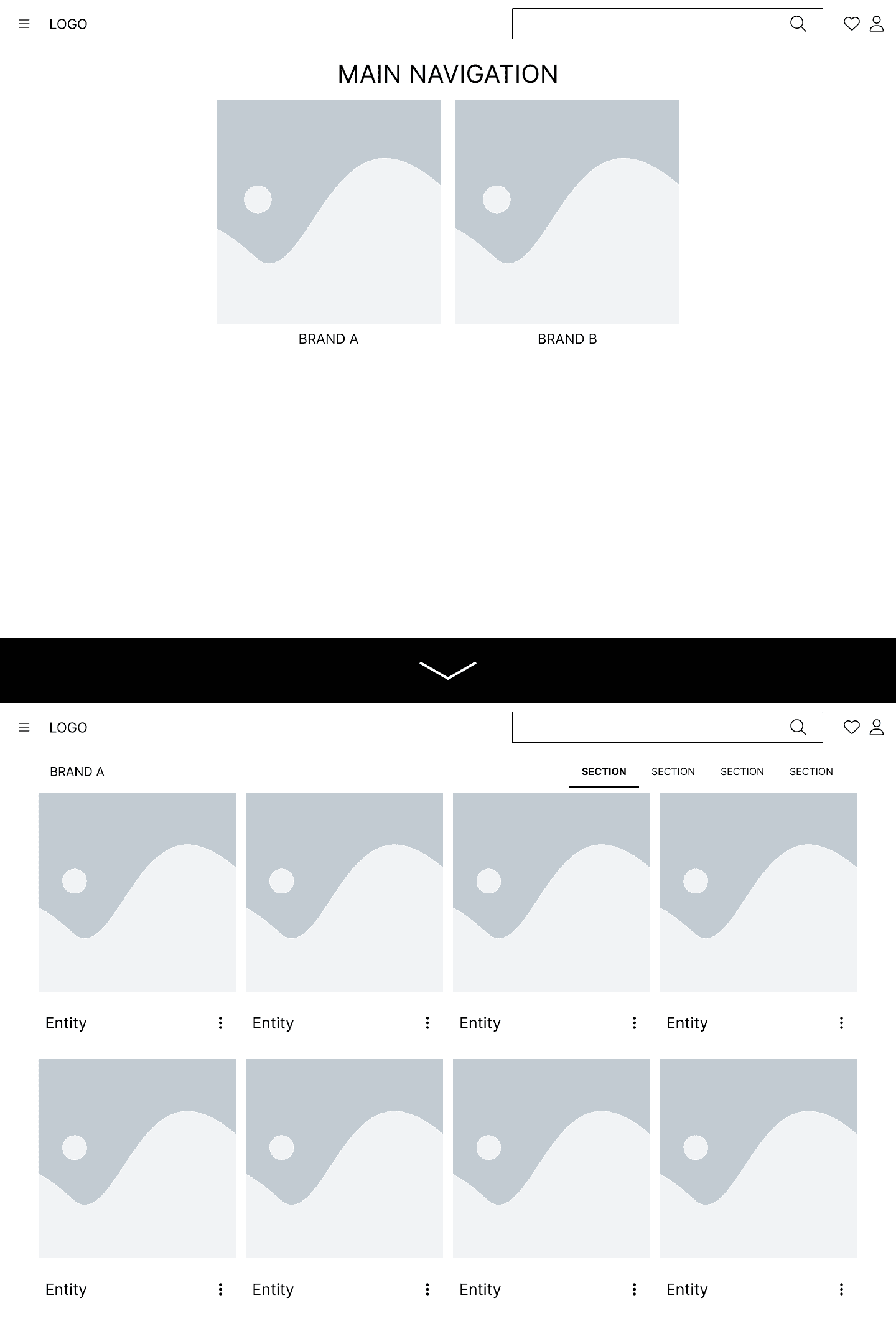
We then moved on to designing the information architecture. Our team’s focus was total navigation flexibility: a single-level menu, where each section provided access to a listing page of content split across different tabs, while search and filter functions remained always active. This organization was ideal both for archivists, who already knew how the materials were divided and could quickly find the content they were looking for, and for users accessing the system to find inspiration, who were nonetheless guided.
Coming from experience with the physical archive, the archive team was initially very wary of this proposal. A “boxed” organization seemed tidier and less chaotic. In response to this feedback, we presented a hybrid proposal: moving the tabs found on each listing page to an additional page, displayed when clicking the desired section from the homepage menu. This way, archivists felt more confident navigating the system, while we avoided carrying the nested, “matryoshka-doll” structure typical of warehouse archiving into the digital archive.
Before

After
What did we design?
We therefore designed a consumption portal that brings together all the archive’s content, documented and interconnected. The homepage includes a search bar always available in the header, the main menu, a section with a Pinterest-style board featuring randomly displayed content for inspiration, and a section featuring the timeline function (which includes the company’s key milestones).
All listing pages let users narrow down results at any time based on what they need, both through the tab component at the top and through filters that adapt live to the content on display. This way, every user can view more items and go into ever greater detail, rather than moving in and out of folders in a rigid system.
The detail pages let users view the item’s asset gallery and its metadata (organized into accordions for greater usability), as well as related assets and entities.
Users can create wishlists and add items to them (to save, share, or order the physical items).
The platform is fully responsive and has been adapted to the client’s visual guidelines.